Install Red Hat Linux Dual Boot Windows 10
Tip for dual-booting Windows 10 Technical. Tip for dual-booting Windows 10 preview and Linux on a. Installed Ubuntu, then tried to install Windows 10. How to Dual Boot Windows 10 and Ubuntu Linux. It is a long time since we've shown you guys how to dual boot a GNU/Linux. Install Ubuntu alongside Windows 10.
It is a long time since we've shown you guys how to dual boot a GNU/Linux distribution and the latest Microsoft Windows operating system on your personal computer. There have been numerous requested recently for a tutorial that presents easy-to-read-and-follow instructions, with screenshots, on how to install the latest Linux operating system alongside Microsoft's recently released Windows 10 OS, which most of you know as dual booting. Many users do not find it dropping their gaming station for a Linux OS tempting, despite the fact that the latter is receiving much attention from game developers lately.
So, a dual boot system is something everyone is willing to try, but it was quite difficult to accomplish this task because of Microsoft's latest operating system. We all know that Microsoft Windows is not Linux friendly, in the way that it does not recognize a Linux formatted disk drive or partition, nor it provides a proper bootloader that lets users boot a Linux kernel-based operating system, such as Ubuntu in our case.
Above all that, many PCs that come preinstalled with Windows 10 have Secure Boot enabled by default. So the first thing you want to do before attempting to install Ubuntu or any other Linux OS alongside Windows 10 is to enter your computer's BIOS/UEFI and disable the Secure Boot option (read the manual if you do not know where it is because there are different types of BIOSes).
Make sure you read the update at the end of the article on the Secure Boot matter. Partitioning your Windows 10 disk drive Before installing Ubuntu, you need to partition the Windows 10 disk drive. There are two scenarios at this point, but first heck to see if you have a single partition dedicated to Windows 10 or multiple ones.
In the first scenario you have a single partition that you need to shrink, but make sure you have enough free space to do that. In the second scenario, you have two or multiple partitions, and you need to decide which one to erase for your new Ubuntu OS. In both cases, right-click on the Windows Start Menu, and choose the 'Disk Management' entry from the context menu. In the first scenario, right-click on the (C:) drive and select the 'Shrink Volume' option. Set the size of the new partition for Ubuntu, which depends on how big the disk drive is and how much free space is available, so it is your decision, but keep in mind that you need at least 10GB for the installation of Ubuntu (20GB is recommended).
Now close the Disk Management application and continue with the guide. In the second scenario, choose the partition you want to erase, let's say (D:) if you only have two, and in the Disk Management application, right-click on the respective partition and select the 'Delete Volume' option and you should have one of those 'Unallocated' partitions, just like in the first scenario. Getting Ubuntu and installing it The latest Ubuntu release is available for download from the website, make sure you download the 64-bit ISO image, which you need to write on a USB flash drive of 2GB or higher capacity using the where you have downloaded the Ubuntu ISO. Once the USB installation is complete, insert the USB stick with Ubuntu on a free USB port on your computer, reboot the system, and immediately access the built-in boot menu to choose the USB drive and boot from it.
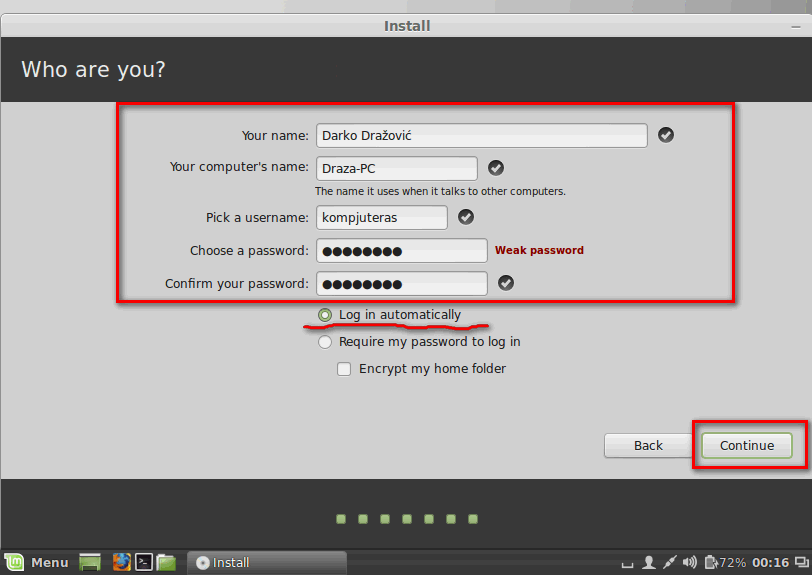
Do not select UEFI USB (it won't recognize Windows 10)! - read the update below for details. Once you do that, you need to follow the instructions provided by us on. The only difference will be that when you arrive the screen where you have to choose where you want to install Ubuntu, you need to select the first option, 'Install Ubuntu alongside Windows 10.' Once the installation is complete, restart the computer.
Bc Drivers License Learners Restrictions On Airlines. Choose between Ubuntu and Windows 10 via Ubuntu's bootloader (accessible with the Esc key).
Hyper-V supports both emulated (“legacy”) and Hyper-V-specific (“synthetic”) devices for Linux virtual machines. When a Linux virtual machine is running with emulated devices, no additional software is required to be installed.
However, emulated devices do not provide high performance and cannot leverage the rich virtual machine management infrastructure that the Hyper-V technology offers. To make full use of all benefits that Hyper-V provides, it is best to use Hyper-V specific devices for Linux.
The collection of drivers that are required to run Hyper-V-specific devices is known as Linux Integration Services (LIS). Although there are more suitable Linux distos for beginners, CentOS is easy enough to install and use with very basic knowledge of Linux. The native integration components and services make it an ideal guest for Hyper-V. CentOS on Wikipedia: Before starting you need to download the CentOS 7 ISO image: (version 7 is the latest at the moment this tutorial is written). Contents: • Create a new virtual machine • Configure temporary network access • Configure CentOS • Install CentOS, create users • Configure network access • Enjoy! Create a new virtual machine 1.1) If you have not set up Hyper-V do it now as told in 1.2) Create a new virtual machine as told in with following settings (steps here referring to respective steps in Hyper-V tutorial): • Step 4.5 >If you have less than 4 GB RAM on your host, assign the vm 1 GB (1024 MB) and unselect Use Dynamic Memory.
When Dynamic Memory is enabled CentOS uses quite a lot of RAM and can slow down your host system. I recommend enabling Dynamic Memory only if you have more than 4 GB of RAM • Step 4.6 >Select Not Connected • Step 4.7 >If you will only use your CentOS for some simple testing, surfing and so on, an 8 to 10 GB virtual hard disk is enough, I recommend 20 to 30 GB • Step 4.8 >Use the CentOS ISO file you downloaded • Come back to this tutorial after Step 4.9. @ I have it up and running The installation is a tiny bit more involved than Ubuntu or Windows, but, your tutorial brought me through unscathed I'm letting it update first now, then I will sync Firefox to get my add-ons and settings set for that, then I'll explore the OS a bit. I chose the Gnome desktop as I like it better personally. I like how I can also choose which packages for a desktop to install or not install, to keep space reduced to just what I need(for example I won't need office stuff) Only problem I have is I cannot find a way for Restricted Extras(they're codecs as in Ubuntu Restricted Extras, as flash won't play and some other codecs, be they web or music & video). Computer Type: PC/Desktop System Manufacturer/Model Number: Cliff's Black & Blue Wonder OS: Win10 Pro, Win10 Pro N, Win10 Home, Win10 Pro Insider Fast Ring, Windows 8.1 Pro, Ubuntu CPU: Intel Core i7-8700K delidded @ 5.00GHz OC Motherboard: ASUS ROG Maximus X Hero Memory: 32 GB Cosair Vengeance Blue 3015MHZ, Timings: 15, 17, 17, 39 Graphics Card: ZOTAC GeForce GTX 1080 Ti AMP! Computer Type: PC/Desktop System Manufacturer/Model Number: Hyper-V Virtual Machine OS: Windows 10 Insider Build - Fast Ring CPU: 8 Virtual Processors(8 threads) Motherboard: N/A Memory: 8192 MB - Dynamic Memory turned on Graphics Card: GTX 1080 Screen Resolution: Being a VM, it depends what size I need at a given moment;) Hard Drives: VM is on a separate internal SSD(Samsung 850 EVO SSD) Browser: Edge Antivirus: Defender Other Info: Secure Boot enabled, All Integration Services are turned on, Enhanced Session Mode selected.
Computer Type: PC/Desktop System Manufacturer/Model Number: Cliff's Black & Blue Wonder OS: Win10 Pro, Win10 Pro N, Win10 Home, Win10 Pro Insider Fast Ring, Windows 8.1 Pro, Ubuntu CPU: Intel Core i7-8700K delidded @ 5.00GHz OC Motherboard: ASUS ROG Maximus X Hero Memory: 32 GB Cosair Vengeance Blue 3015MHZ, Timings: 15, 17, 17, 39 Graphics Card: ZOTAC GeForce GTX 1080 Ti AMP! Computer Type: PC/Desktop System Manufacturer/Model Number: Hyper-V Virtual Machine OS: Windows 10 Insider Build - Fast Ring CPU: 8 Virtual Processors(8 threads) Motherboard: N/A Memory: 8192 MB - Dynamic Memory turned on Graphics Card: GTX 1080 Screen Resolution: Being a VM, it depends what size I need at a given moment;) Hard Drives: VM is on a separate internal SSD(Samsung 850 EVO SSD) Browser: Edge Antivirus: Defender Other Info: Secure Boot enabled, All Integration Services are turned on, Enhanced Session Mode selected. Computer Type: PC/Desktop System Manufacturer/Model Number: Cliff's Black & Blue Wonder OS: Win10 Pro, Win10 Pro N, Win10 Home, Win10 Pro Insider Fast Ring, Windows 8.1 Pro, Ubuntu CPU: Intel Core i7-8700K delidded @ 5.00GHz OC Motherboard: ASUS ROG Maximus X Hero Memory: 32 GB Cosair Vengeance Blue 3015MHZ, Timings: 15, 17, 17, 39 Graphics Card: ZOTAC GeForce GTX 1080 Ti AMP! Computer Type: PC/Desktop System Manufacturer/Model Number: Hyper-V Virtual Machine OS: Windows 10 Insider Build - Fast Ring CPU: 8 Virtual Processors(8 threads) Motherboard: N/A Memory: 8192 MB - Dynamic Memory turned on Graphics Card: GTX 1080 Screen Resolution: Being a VM, it depends what size I need at a given moment;) Hard Drives: VM is on a separate internal SSD(Samsung 850 EVO SSD) Browser: Edge Antivirus: Defender Other Info: Secure Boot enabled, All Integration Services are turned on, Enhanced Session Mode selected. Similar Threads Tutorial Category deleted - updated in another thread Virtualization Hi there Trying to install programs while connected via RDP (the normal way of accessing your HYPER-V VM remotely). Cannot install programs. This seems a bit daft - I can't always be at the console of the HOST machine - I usually access VM's.
Virtualization Hi there I can't install HYPER-V properly on a W10 HOST -- gets message about something in BIOS not enabled. Installs fine on W8.1. On W10 the boxes are greyed out. Cheers jimbo Virtualization Network and Sharing Hi there Cannot see any option on HYPER-V to INSTALL an OS????!! The management and configuration screens come up but HOW do I install the OS and Start the VM!!! Using WINDOWS 10 as HOST.
Cheers jimbo Virtualization. Hgv 1 Driver Job London.